Teeth Whitening: How It Works, Who It Suits, and What Results Are Realistic
Considering teeth whitening? This guide covers how professional whitening works, who is suitable, realistic results, genuine risks, and what to ask beforehand.
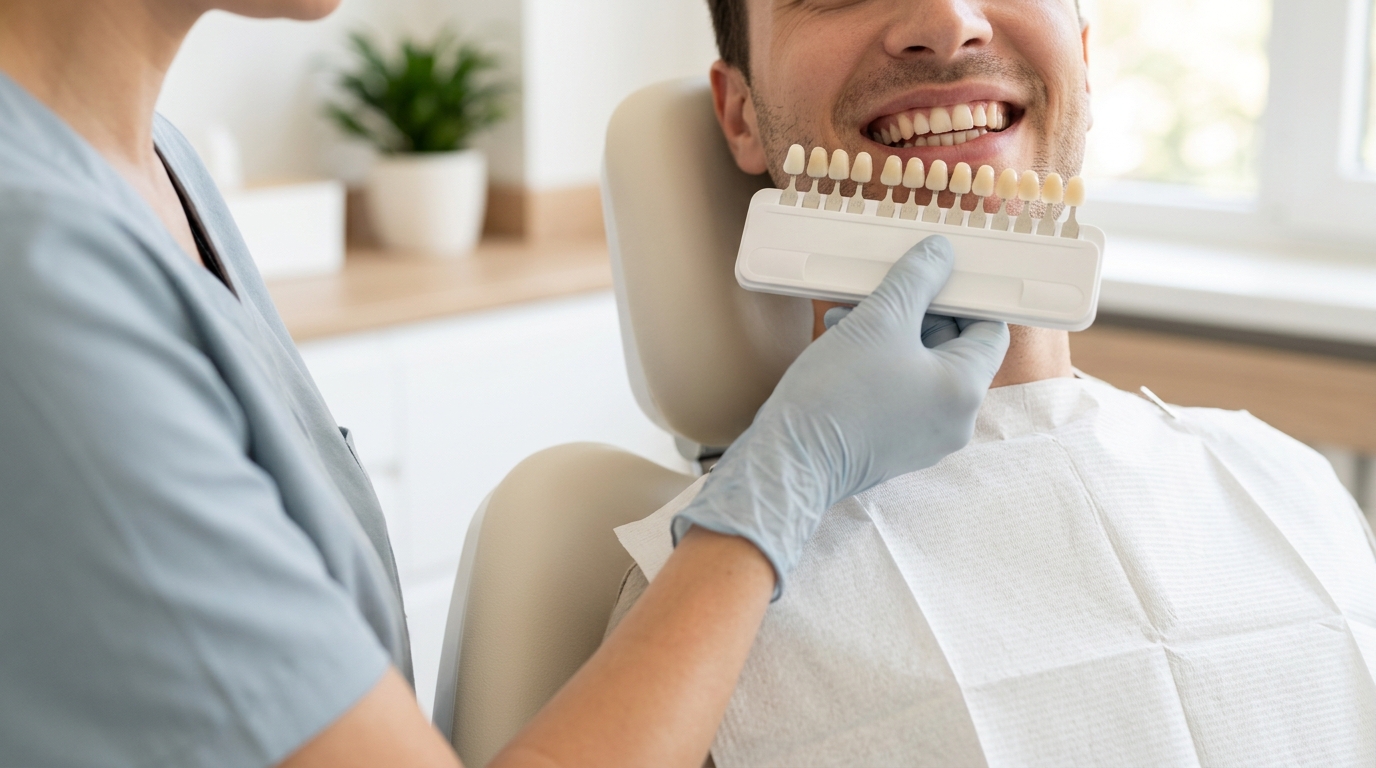
Tooth discolouration is one of the most common reasons people seek dental treatment, yet the range of whitening options — professional in-clinic procedures, dentist-supplied home kits, and over-the-counter products — makes it genuinely difficult to know what is worth pursuing. What follows is a plain account of how these treatments work, what they can and cannot change, and what the trade-offs look like in practice.
What causes teeth to discolour
Discolouration falls into two broad categories, and the distinction matters because whitening treatment only addresses one of them. Extrinsic staining — the kind caused by coffee, tea, red wine, tobacco, and certain foods — sits on or just within the outer enamel surface and responds well to bleaching. Intrinsic discolouration originates inside the tooth itself: it can result from tetracycline antibiotic exposure in childhood, excessive fluoride intake during tooth development, trauma, or the natural translucency changes that come with age as enamel thins. Intrinsic staining is far more resistant to bleaching, and a clinician assesses which type is present before recommending any course of treatment.
How professional whitening works
Professional whitening uses hydrogen peroxide or carbamide peroxide — two forms of the same active compound — to penetrate the enamel and break down the molecules responsible for staining. The concentration of the bleaching agent is substantially higher in clinical products than in anything available over the counter, which is why professional treatment tends to produce more noticeable results over a shorter period.
In-clinic treatment typically involves applying a high-concentration gel directly to the teeth, sometimes in combination with a light or laser source intended to accelerate the process. The evidence for light activation producing meaningfully better outcomes than the gel alone is mixed, and clinicians differ in their view of it. A single in-clinic session usually lasts between 60 and 90 minutes. Some protocols use two or three shorter applications within the same appointment.
Take-home whitening kits supplied by a dentist use a lower-concentration gel worn in custom-fitted trays, typically for one to two hours a day over a period of one to three weeks. Results build gradually rather than immediately. Many clinicians consider the take-home approach to produce equally stable outcomes as in-clinic treatment, though the timeline is longer. Combined protocols — a single in-clinic session followed by a course of home use — are also commonly used.
Who is and is not a suitable candidate
Whitening is most predictably effective on yellow-toned staining from dietary sources or ageing. Brown staining is less responsive, and grey staining — particularly that caused by tetracycline — responds poorly to conventional bleaching and may require an alternative approach such as veneers or crowns if a change in appearance is the goal.
Candidates are typically evaluated for several factors before treatment proceeds. Active tooth decay, gum disease, or cracked enamel should be treated first; whitening gel can penetrate damaged surfaces and cause pain or further harm. Existing restorations — white fillings, crowns, veneers — do not bleach, so whitening the natural teeth around them may create a mismatch in shade that requires the restorations to be replaced. Pregnancy and breastfeeding are generally considered contraindications, and treatment is not usually carried out on patients under 18.
What results are realistic
Outcomes vary considerably between individuals. The starting shade, the type of staining, the thickness of the enamel, and how consistently a take-home protocol is followed all affect how much change occurs. Most people with extrinsic staining see a noticeable lightening; the degree of that lightening is not predictable in advance for any given patient. Some patients see very little change despite completing the full course of treatment.
Whitening is not permanent. How long the effect lasts depends on diet, tobacco use, and oral hygiene habits. Regular consumption of staining foods and drinks will cause the teeth to darken again over months to years, and periodic top-up treatment is typically needed to maintain the result. The longevity of whitening varies between patients; a clinician can give a more specific estimate based on individual circumstances.
Risks and side effects
Tooth sensitivity during or after treatment is the most common side effect, affecting a substantial proportion of patients to some degree. It is usually temporary and resolves within a few days of completing treatment, but for people who already have sensitive teeth it can be more pronounced. Dentists often recommend using a desensitising toothpaste in the weeks before treatment to reduce this.
Gum irritation can occur if the bleaching gel contacts soft tissue, which is more likely with poorly fitted trays or without professional supervision. Overuse of whitening products — repeating treatment more frequently than recommended — has been associated with enamel demineralisation over time, though this is generally avoidable with professionally supervised treatment at appropriate intervals.
- Temporary tooth sensitivity, ranging from mild to significant depending on the individual
- Gum irritation or chemical burn if gel contacts soft tissue
- Uneven results where natural teeth whiten but existing restorations do not
- Little to no visible change if staining is intrinsic rather than extrinsic
- Enamel changes with repeated overuse, though this is avoidable with professional supervision
Questions to ask before committing
A consultation before treatment is the point at which a clinician assesses the type of staining present, identifies any dental problems that need addressing first, and explains what outcome is realistic for that particular patient. It is also the right moment to ask specific questions.
- Is my discolouration extrinsic or intrinsic, and how does that affect what whitening can achieve?
- Do I have any existing restorations that will not bleach, and will that create a visible mismatch?
- Is there any tooth decay or gum disease that should be treated before whitening proceeds?
- Which protocol do you recommend — in-clinic, home-use trays, or a combination — and why?
- How much sensitivity should I expect, and what can be done to reduce it?
- How long is the result likely to last given my habits, and what is involved in maintaining it?
Teeth whitening as part of a broader dental plan
Whitening is sometimes considered alongside other cosmetic dental treatments — veneers, bonding, or crown work — as part of a more comprehensive approach to the appearance of the teeth. In these cases, the sequence matters: if veneers or composite restorations are planned, whitening is generally carried out first so that the restorations can be matched to the new, lighter shade of the natural teeth. The order of treatment is decided at consultation based on what is planned overall. For those researching how whitening fits into a broader course of dental care abroad, reviewing available dental treatment packages can provide a useful starting point for understanding what is typically combined.
Travelling to Turkey for teeth whitening
Professional teeth whitening is commonly performed in Istanbul and Antalya, both of which have a well-established pattern of receiving international patients for dental treatment. The treatment itself is brief — an in-clinic session typically takes no more than a morning — but patients who combine whitening with other dental procedures often plan a stay of three to five days to allow for any follow-up appointments and adequate rest.
It is common practice in Turkey for dental facilities that see international patients to arrange airport transfers and assist with accommodation options, either directly or through a coordinating service. Patients travelling specifically for whitening alone should consider whether the cost and logistics of travel represent reasonable value for their individual situation, particularly since professional whitening services are widely available in the UK and Ireland. The calculation shifts when whitening is one element of a broader course of dental work that makes an extended trip worthwhile on its own.
Before travelling, it is advisable to obtain a full written treatment plan, confirm what is included in any quoted fee, understand the protocol for managing sensitivity or complications after returning home, and ensure continuity of care with a dentist in the home country is possible.